Consultations
Planning Surgery in Korea: How VG Plastic Surgery Describes Consultation, Stay and Follow-Up
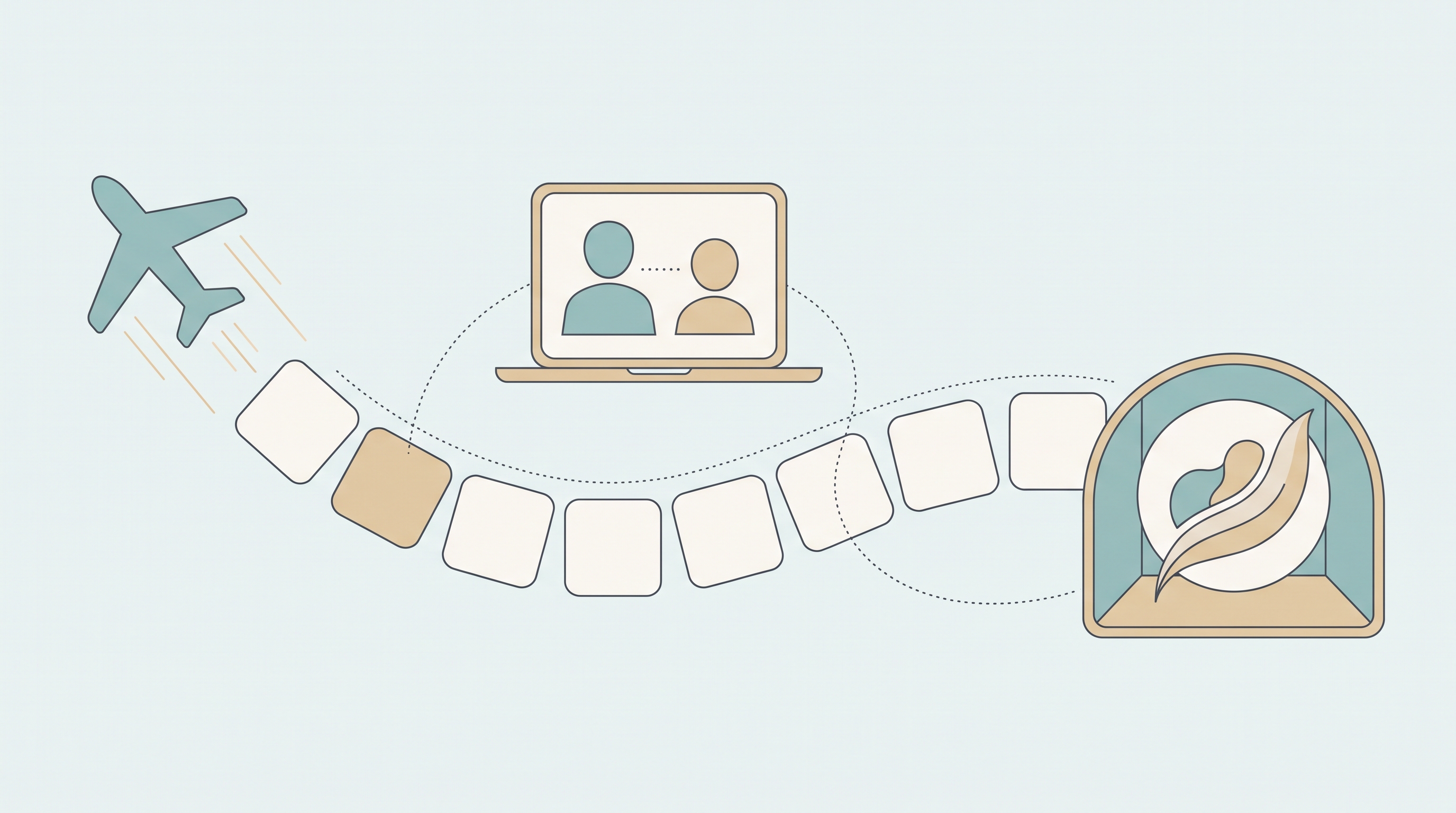
The hardest part of planning surgery abroad is often arithmetic rather than medicine. How many days of leave do you request? When is it sensible to book the return flight? Most people have to commit to both answers, and pay for the ticket, before any clinician has examined them in person.
One way to build a workable draft calendar is to read a clinic's stated international-patient process as a sequence: what happens before departure, how long the clinic expects patients to remain in the country, who is on hand during the stay, and what care continues once the flight home is over. What follows uses the process published by VG Plastic Surgery in Seoul as that worked example. It is a provider's account of how it operates, valuable as a planning template rather than as a prediction of how any individual will heal, and the numbers in it are scheduling ranges attached to procedures, not to people.
Before the flight: the consultation that sets your calendar
The pre-travel stage, as the clinic describes it, is a free fifteen-minute video consultation held with the doctor who would actually perform the operation — explicitly not a sales coordinator working from a price sheet, and not an automated chat. An interpreter sits in, so the patient can speak their own language. For someone whose questions have so far been handled by messaging apps, that is the first point at which a surgeon is looking at their case and answering in real time.
Fifteen minutes goes quickly, so it helps to arrive with the decisions that are expensive to reverse already written down: whether you are a candidate at all, which procedure suits your anatomy and which does not, the realistic cost range, and how many days in Korea the plan under discussion would require. Booking the call begins with a consultation request on the clinic's own site at vg plastic surgery, where the surgery categories you will be asked to choose between are also set out; naming your concern precisely at that stage leaves more of the appointment for your own case and less for orientation.
Whatever is agreed on the call only becomes something you can plan against once it exists on paper. Before booking flights or accommodation, ask for an itemised written quote in a language you read fluently, showing what is included and what is not, and for the proposed dates to be confirmed against the operating schedule. A spoken estimate and a written one behave very differently when a date needs to move.
How many days to block out, by procedure
The clinic publishes recommended stay lengths specifically for travel planning, and they vary by operation rather than by patient. Non-incisional double eyelid surgery carries a recommended stay of five to seven days. Incisional double eyelid surgery and lower eyelid fat repositioning are both given seven to ten days. Rhinoplasty involving osteotomy carries the longest of these figures, at ten to fourteen days.
Read those as planning ranges for time in the country, covering the post-operative checks that happen while you are still nearby. They are not a medical statement that a particular patient will be comfortable, presentable or fit to travel on a given day — healing pace differs from person to person, which is precisely why a range attaches to the procedure and not to the individual. Treat the published figure as the minimum block to negotiate with an employer, then confirm your own dates with the surgeon before anything is ticketed, and consider what your position would be if a check-up suggested staying an extra day or two.
Who is on staff while you are in Seoul
During the stay itself, an overseas patient is relying almost entirely on the team in the building. The clinic states that eight doctors across three specialties share one operating schedule — plastic surgeons, an ENT specialist and three anaesthesiologists — and emphasises that they are on staff rather than called in for the day. It further describes the three anaesthesiologists as board-certified and working there full time rather than on call.
That composition is most relevant to two particular readers. If your nose is a breathing problem as well as a shape, the clinic says its ENT specialist reviews nose cases together with the plastic surgeons, on the stated reasoning that a nose which photographs beautifully but breathes badly is a failed operation; functional questions can therefore be raised inside the same planning conversation rather than deferred to a separate referral at home. If your main fear is the anaesthesia rather than the incision — common among people travelling alone — staffing is a fair thing to ask about in detail. This is published staffing composition, not independently verified credentials or a ranking against other clinics, so licence details, certification and case experience remain questions to put directly to the clinic.
The clinic also lists recovery equipment on site, including a hyperbaric oxygen chamber, with a condition attached in its own description: whether a patient needs it is the surgeon's call, based on how that recovery is going. It is presented as available equipment governed by clinical judgement rather than a standard part of every stay, and an inventory tells you what a facility owns without saying anything about what it would do for your healing. If a recovery service matters to your budget or your schedule, the useful questions are whether it would apply to your case at all, how many sessions are envisaged, and whether they are billed separately.
After you fly home: three months of written feedback
The stretch of the timeline overseas patients most often underestimate begins after departure, when swelling is still settling and the operating team is several time zones away. Here the clinic describes three months of remote follow-up: photograph reviews at set intervals, each answered in writing by the surgeon. A defined written channel back to the person who performed the operation is a meaningful structural detail, because the alternative is explaining a foreign surgical plan to a local clinician who has no line to whoever made it.
Turn that published arrangement into your own checklist before you commit. Establish the exact intervals of the photograph reviews and how far they extend past the three-month mark if healing is slower. Establish who writes the responses and in what language. Establish what the clinic proposes if something genuinely needs to be examined in person where you live, and what documentation would travel with you to a doctor there. A clear written plan for the months after the flight home deserves as much attention as the surgery date itself, and none of it substitutes for a personal consultation with a qualified clinician about whether any of these procedures suits you.