Consultations
Non-Surgical Facelift in Korea: Questions to Ask Before You Agree to a Treatment Plan
Most people looking into a non-surgical facelift in Korea want something simple: a firmer jawline or higher cheeks without an incision. The harder part comes later, when a clinic gives you a plan that combines devices, threads, visit dates and a price. This guide covers the non-surgical facelift consultation questions to ask before you agree. It uses one Seoul clinic's published description of its own approach as a worked example, not as a recommendation.
What a non-surgical lift is, and is not, expected to do
Start with expectations, because they shape every other question. THE Beautiful Clinic in Seoul is the example used throughout this article. On its own page, it says that no device or thread gives the result of a surgical facelift. It also says that results and recovery vary from person to person and that every treatment can have side effects.
Keep those points in mind during a consultation. If a proposal seems to promise a dramatic, surgery-like change, ask the doctor what a realistic change would look like for your face and how they would tell whether the plan had worked. A clinic that states its limits clearly is easier to question. One that doesn't deserves more questions, not fewer.
Ask which layer each proposed treatment is meant to reach
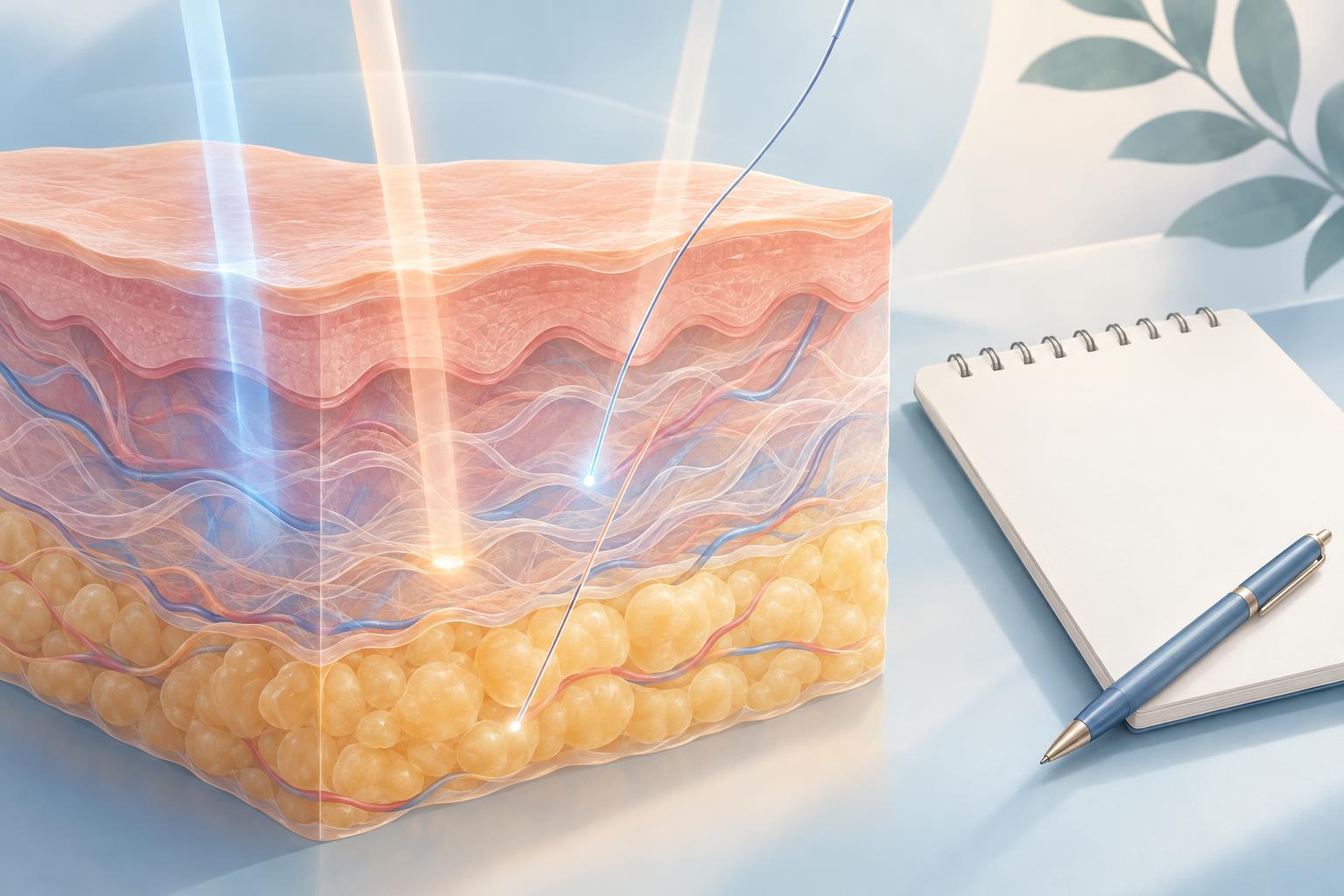
A useful plan explains why each item is there, not just what will be done. The clinic describes its lifting programme as the plan that decides "which machine, at which depth and in which order," adding that "the depth decides the device." Its own breakdown pairs radiofrequency with the dermis, focused ultrasound with the SMAS layer, microwave or radiofrequency with fat, and threads with tissue that needs repositioning.
THE Beautiful Clinic's guide to non surgical facelift korea also describes its process. A consultation and 3D scan come first, and then the doctor decides which layers to treat. Two treatment devices may be used in one visit if they work on different layers, but devices that act on the same layer are spaced apart. This is the clinic's own method, not an independent judgement of what suits a particular face. Still, it's a clear example of a layered lifting plan, and you can ask any clinic to walk you through its plan in the same way.
Some questions follow from that: Which layer is each item meant to address, and what in my face points to it? Why are these two treatments combined in one visit, or why are they spaced apart? If one of the layers you plan to treat isn't my main concern, how would the plan change?
Check how recovery and price are presented in the plan
Recovery is where a plan has to fit your travel dates. The clinic's downtime table lists its multi-device lifting programme as ranging from no downtime to flushing on the day, and thread lifting as 2–5 days of swelling. Those are the clinic's own figures, not a promise about how your skin will respond. Ask which item in your plan sets the recovery time, and whether its timing leaves enough days before you fly.
On price, the same clinic says there is no package price for a full course. A plan that combines two treatments is priced from the lines it uses, and the final figure is confirmed at consultation. Its price list dated 20 August 2026 shows Ultherapy Prime at 1,200,000 KRW for 300 shots and Thermage FLX at 1,990,000 KRW for 600 shots, both before 10% VAT.
These figures come from one clinic's dated list. They aren't a market rate or a current quote, but they show how to read any facelift quote in Korea. Check that each line names the treatment, the unit (such as shots or sessions), whether VAT is included and the date the price applies. Without the unit, two quotes for what looks like the same device can't really be compared.
Know where non-surgical options end and surgery begins
Sometimes the honest answer in a consultation is that your concern is beyond what devices or threads are likely to change. KCODI is a clinic-booking and medical-interpretation coordinator, not a clinic. Its surgical facelift page describes techniques from a mini lift to SMAS or deep plane surgery, with the surgeon choosing after examining the patient's skin and bone structure.
If you're comparing non surgical facelift korea options with an operation, that surgical page shows which questions it suggests raising at a consultation: where the scar will be, which layer is lifted, who handles anaesthesia and whether you stay overnight. The question of which layer is lifted applies just as much to a non-surgical plan.
KCODI says it gives patients a written, itemised quote before any deposit and tells them their interpreter's name and language before they travel. It also notes that what clinics offer differs and that it will tell you what applies at a specific clinic. These are the coordinator's own commitments. KCODI has no stated connection to the clinic quoted earlier, and nothing suggests it arranges that clinic's non-surgical treatments or uses its prices.
What to share and confirm before you say yes
Questions run in both directions. The clinic asks patients to share their full medical history at consultation, including any recent filler, threads, surgery or medication. KCODI's surgical page likewise tells patients to tell the surgeon about blood thinners, supplements and smoking. Writing this down before the appointment can help make sure nothing is missed, especially if you're working through an interpreter.
Before you agree to a plan, consider asking for the main points in writing: which layers will be treated, which treatments happen in the same visit and which are spaced apart, the expected recovery for each, and a line-by-line quote with units, VAT status and date. None of this guarantees a result, and results vary between individuals. But a written plan you understand gives you a firmer basis for saying yes, or for walking away to compare other options. This is general information, not medical advice.